
Can Ecommerce Ever Be Sustainable?
When we say we are “climate-conscious,” what do we really mean?
Concept
Ecommerce allows wider access to global markets. With that access, the impacts of consumerism on a world-wide level can be devastating. The challenge is to offer customers more sustainable products in markets that are driven by relentless expansion and consumption.
Techniques
Consumers are acutely aware of the environmental damage wrought by centuries of irresponsible use of our planet’s resources.
It’s important that we move from “educational” roles as marketers to a more transparent, data driven response. We can use the digital infrastructure that has been created to broadcast the true expense of our behaviour beyond financial concerns.
Notes
We currently have emerging technologies to make our economic actions transparent and to hold consumers and manufacturers accountable.
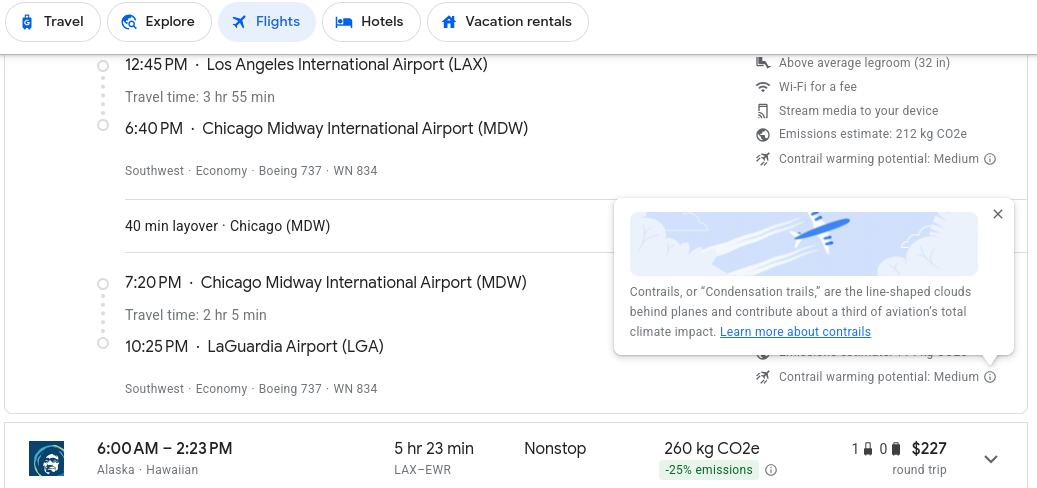
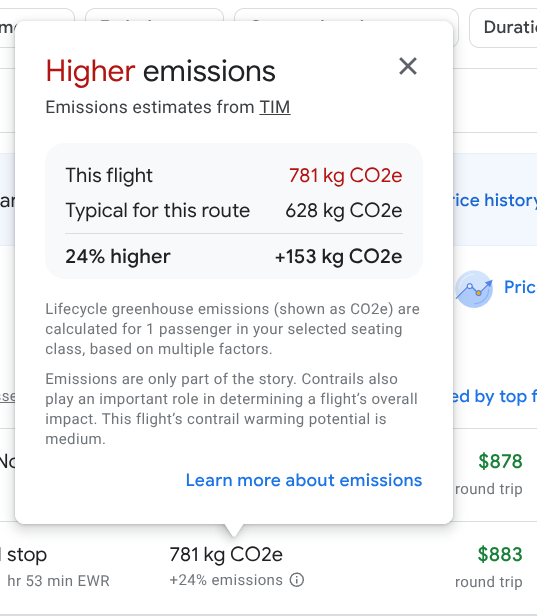
Google Travel has weighted its airfare comparison listings to include a calculated CO2 emissions value.
To be fair, ecommerce itself does not create any environmental or social problems. For all intents and purposes, it is a delivery device; an information distributor. It merely allows global commerce opportunities and everything that contributes to that goal.
We can not, however, ignore ecommerce’s role in this slow-moving environmental disaster.
To understand and correct this is really, really difficult. We are seemingly at odds with perpetual capitalism and the need to act communally, not individualy.
Ecommerce is, alone, a tool that can affect change. Deep understanding of the power of marketing, language and design is required to begin disassembling an immediate threat to our environment.
- Fuel & Energy is the top polluter, contributing to around 75% of global greenhouse gas emissions, mainly through fossil fuels like coal, gas, and oil.
- Agriculture and food production account for up to 18% of emissions, largely from livestock, land-use changes, and ammonia pollution.
- The fashion industry (especially fast fashion) is behind 8–10% of global carbon emissions, and generates massive textile waste and water pollution.
- Food retail and waste contribute significantly to emissions, with 1.9 million tonnes of food wasted annually in the UK alone, and high emissions from refrigeration and plastic packaging.
- Transport is responsible for one-fifth of global CO₂ emissions, with road vehicles being the main culprit, followed by freight and air travel.
- Construction causes 23% of air pollution, releasing dust, gases, and using energy-intensive machinery, especially in fast-growing urban areas.
- Technology, including data centers and cryptocurrency, uses huge amounts of electricity and is rapidly becoming a major emissions source.
The technology that underpins ecommerce’s success is also being used to mitigate the damage done to the climate. cgk.digital is proud to use, support and deploy the following:
 STRIPE CLIMATE
The merchant account giant has initiated an innovative, effective program. Individual ecommerce owners can Each card transaction
 #SHOWYOUR
Design can be many things, but the thing at which it succeeds best is education. Professor Ed Hawkins (University of Reading) has created a graphic entitled “Climate Stripes” which make an eloquent, and damning point. The Earth is indeed warming.

GOOGLE FLIGHT
Air travel is really problematic ecoogically. No matter your actions elsewhere, the carbon footprint of flying is disproportinately large.
CO2 emissions, contrail formation and more are calculated right up front; a true example of more information equaling better decisions.
Further Information:
The Economist looks at how damaging the fast fashion industry truly is.
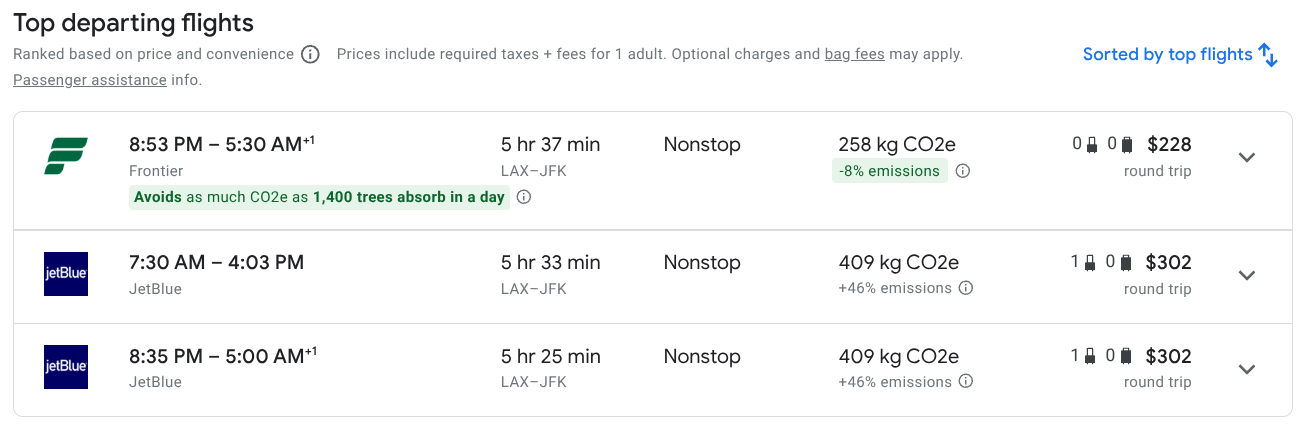
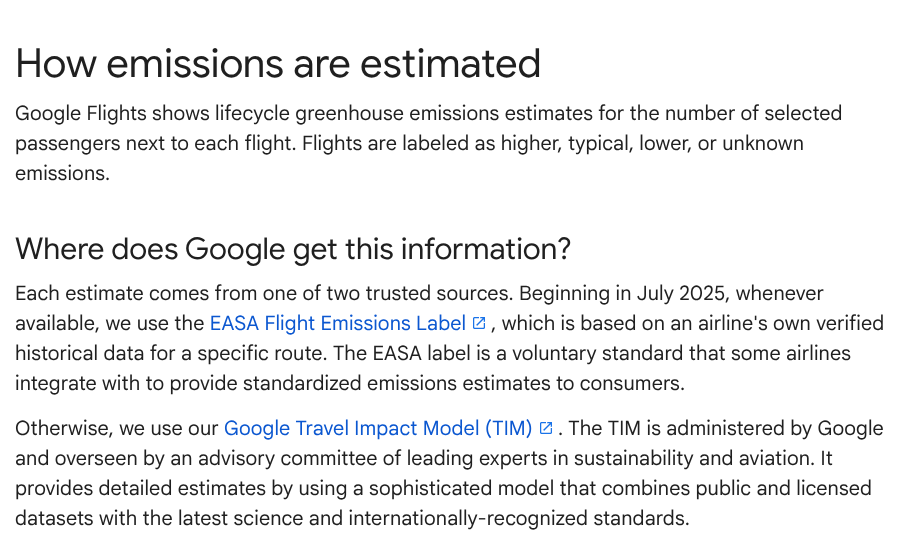
Price is most likely the decision point for most consumers. However, in cases of comparable price points, the transparency of the flight’s evironmental impacts factors heavily with certain consumers.
Environmental impact modelling could be useful in various industries, including energy, fashion and agriculture. The true cost of purchasing any item could become a major consideration for marketing purposes.
Are you prepared to integrate this data?
Discover more from cgk.digital
Subscribe to get the latest posts sent to your email.